Constant Contact:
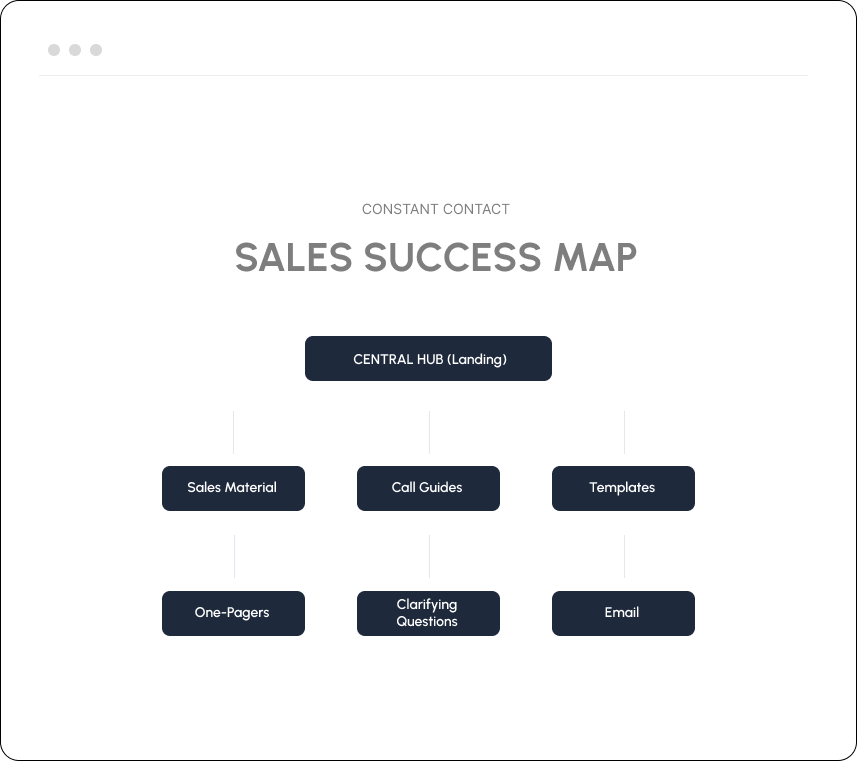
The Sales Success Map
Moving a global sales organization from a "PowerPoint" mindset to a "Database" mindset.
Quick Summary
The Problem: Sales conversation training was trapped in a 100+ slide static PowerPoint and printed binders, leading to information silos, "Version Drift," and frustration during live calls.
The Fix: I built a centralized, web-based interactive repository with branching navigation and decentralized editing, moving the team toward a scalable repository.
The Result: Formally recognized by the Chief Sales Officer (CSO) for projected impact on sales velocity and onboarding accuracy.
Role: Senior Systems Designer
Tools: Articulate 360 Rise, Excel, Google Docs
Scale: 500+ Users / Global Workforce
Focus: Information Architecture & Design Ops
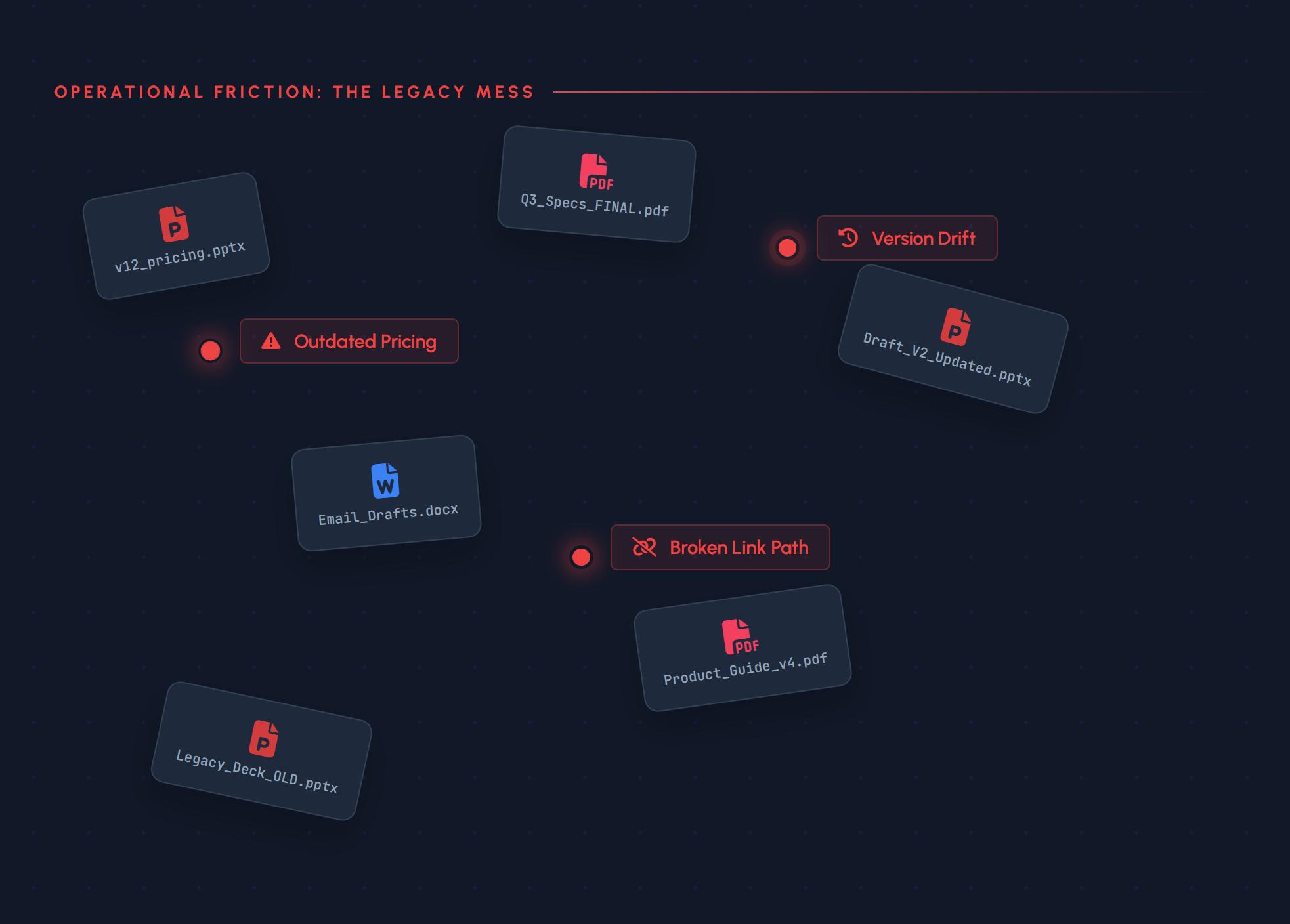
Mapping the Legacy Friction: Scattered files and static 100-page decks that created significant cognitive bottlenecks and version drift for the global sales team.
The Challenge
Solving the Bottleneck
Constant Contact relied on a massive PowerPoint deck as its primary sales resource. During discovery, I identified that the asset was failing because it was too dense for real-time use. Updates were a Design Ops nightmare; every pricing change required a designer to manually re-export and re-distribute files to the entire global team, leading to outdated information being used on calls.
The EVOLUTION
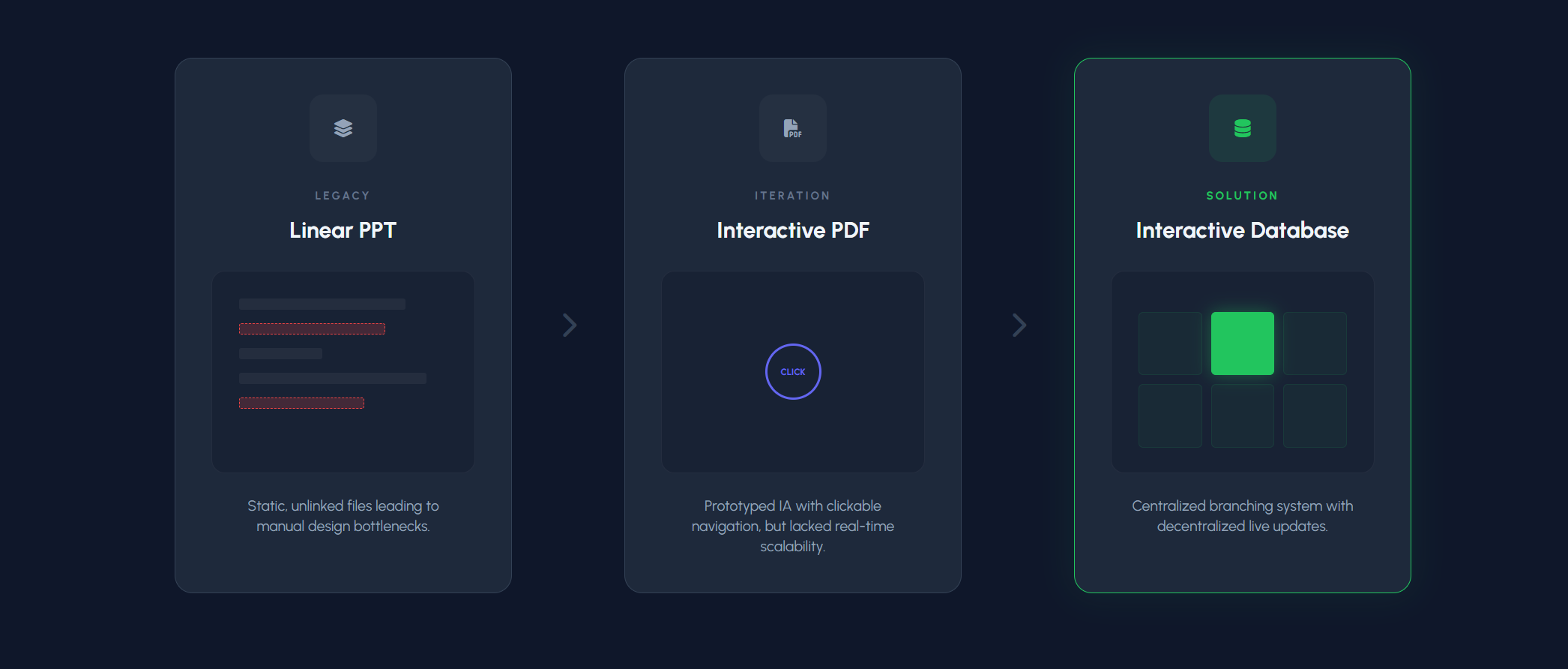
The Architectural Pivot: Moving from a linear PowerPoint sequence to a modular, branching Information Architecture
From Linear to Branching
I led a multi-stage migration to modernize the workflow and reduce the "Version Drift":
Phase 1 (PPT): Static, linear navigation. Frustrating to use during a sales call
Phase 2 (Pivot): Prototyped an interactive InDesign PDF. Solved navigation but identified a "Design Ops" bottleneck for updates.
Phase 3 (Solution): Created a branching, web-based database (Google Sites). Replaced linear decks with a dynamic repository of guides, email templates, and directories. All easily editable by shared teams and viewable across organization.
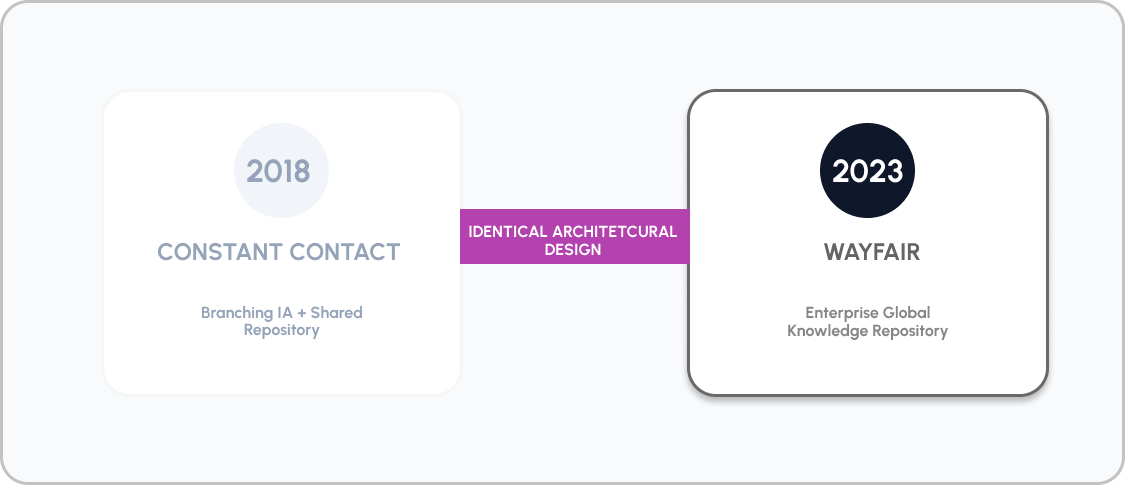
Proving Scalability: A direct comparison of the architectural logic used in the Sales Success Map (2018) vs. the enterprise-level global knowledge systems utilized by Wayfair (2023).
The result
The project fundamentally changed how the sales enablement team operated. Upon joining Wayfair years later, I discovered they utilized the exact same architectural logic for their global internal repositories. This "Full-Circle" moment validated the approach as a durable, industry-standard solution for enterprise-level technical documentation.
Enterprise Validation
"The Sales Success Map (SSM) moved us from a fragmented library of files to a single source of truth that empowered our global team to sell with precision."
Next Project